If you missed the recent SalesProcess360 webinar, ROI from CRM: 3 Takeaways in 30 Minutes, access the on-demand video here.
- 504-957-8499
- sales@salesprocess360.com
SalesProcess360 Blog
27
Jun
MDM recently spoke with me about getting the most from your existing technology for its annual Distribution Trends Special Issue, out now at mdm.com. I spoke with Associate Editor Eric Smith about the importance of starting with processes, not systems, when considering new technology.
23
Jun
So you’ve spent the right amount of time and money to clean up your data, and have had a successful CRM implementation.
But remember: The work doesn’t stop the minute you hit Go.
13
Jun
Join me for a quick 30-minute webinar on June 23, 2-2:30 ET, based on my new book ROI for CRM: It’s About Sales Process, Not Just Technology.
9
Jun
Before implementing a new CRM, most companies think they have their arms around their data, but when they really dive in, they realize their data is all over the place. Multiple salespeople with the same contacts, spelling issues, no connections between contacts and companies – you name it.
19
May
It is always difficult to get everyone on-board with new technology. CRM is no exception. In fact, distributors, reps and manufacturers often face a challenge in getting “sales cowboys” to embrace CRM. Some worry that Big Brother wants to look over their shoulders. Some just resist a change to their regular routines.
16
May
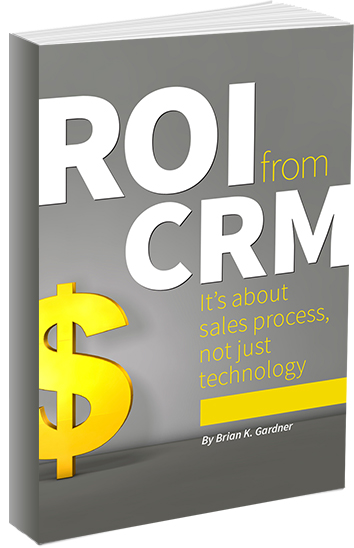 I’m excited to announce my new book, ROI from CRM: It’s About Sales Process, Not Just Technology, is now available from MDM. Order your copy here.
My goal with this book was to provide simple yet effective strategies to get the most from customer relationship management. When you read this book, you will learn how to approach CRM as a system for leveraging knowledge throughout your business, and gain an edge with a revamped sales process and engaged team.
21
Apr
One of the most common reasons that CRM fails for industrial sales organizations is because they try to do too much, too quickly.
I encourage you to start slow and grow. Don’t try to do everything at once.
6
Apr
Manufacturer visits can be a pain point for distributors. The good (and maybe for some, surprising) news: They can be managed with your CRM system.
22
Mar
There’s more to success with CRM than your initial investment in a system. In fact, the cost in time and money can be up to four to seven times that of the software itself, depending on what you want to roll out to your team.
SalesProcess360 Videos featuring Brian Gardner
Get insights based on decades of experience in industrial markets, including why you should think beyond outside sales, how to take a proactive approach to sales opportunities and how to let sales process drive your CRM wish list.